
Generators are widely used to produce electrical power in homes, industries, and backup power systems. One of the main classifications of generators is based on the method used to transfer electrical current to the rotating part of the machine. In this regard, generators are commonly divided into brushed generators and brushless generators.
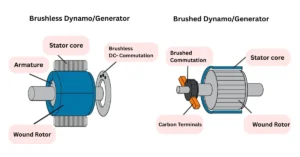
Brushed Generators
A brushed generator uses carbon brushes and slip rings to transfer electrical current between the stationary and rotating parts of the machine. The brushes remain in physical contact with the rotating slip rings, allowing current to flow into the rotor windings.
Although brushed generators have a simple design and are relatively inexpensive, they require regular maintenance because the brushes wear out over time. The friction between the brushes and slip rings can also produce sparks and heat, which reduces efficiency and may limit the generator’s lifespan.
Brushless Generators
Brushless generators, as the name suggests, operate without carbon brushes. Instead of using direct contact, they use an exciter generator and rotating rectifiers to supply current to the rotor. This design eliminates mechanical contact between moving electrical parts.
Because there are no brushes, brushless generators offer several advantages such as higher reliability, lower maintenance, improved efficiency, and longer service life. They also avoid sparking, making them safer for many industrial environments.
Which One is Better?
While brushed generators are still used in some small or older systems, brushless generators have become the preferred choice in modern power generation. They are commonly used in large generators, industrial power systems, and modern alternators due to their durability and reduced maintenance requirements.
Conclusion
Both brushed and brushless generators serve the same purpose of generating electricity, but their internal design and maintenance requirements are quite different. With advancements in generator technology, brushless generators are increasingly replacing brushed designs because of their efficiency, reliability, and long-term performance.