In diesel generator sets, PMG and AREP are two different excitation systems used to supply power to the AVR (Automatic Voltage Regulator) and to control the generator output voltage.
They mainly differ in how the AVR gets its power and how well the generator handles load changes and non-linear loads.
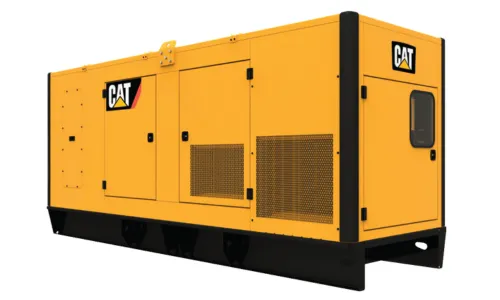
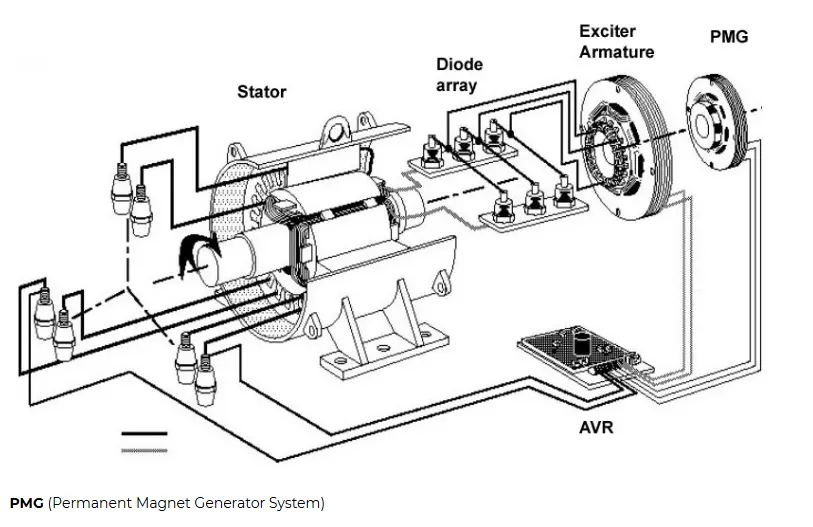
The PMG (Permanent Magnet Generator) system uses a small, separate alternator with permanent magnets mounted on the same shaft as the main generator. This PMG provides an independent and stable power supply to the AVR, completely isolated from the main generator output. Because of this independence, PMG-based generators offer excellent voltage stability even during sudden load changes, heavy motor starting, and short-circuit conditions.
This System include superior voltage regulation, strong short-circuit current capability, reliable operation with non-linear loads such as UPS systems, VFDs, and welding machines, and prevention of voltage collapse under heavy or transient loads. These benefits make PMG systems ideal for critical and industrial applications, although they are comparatively more expensive due to additional components.
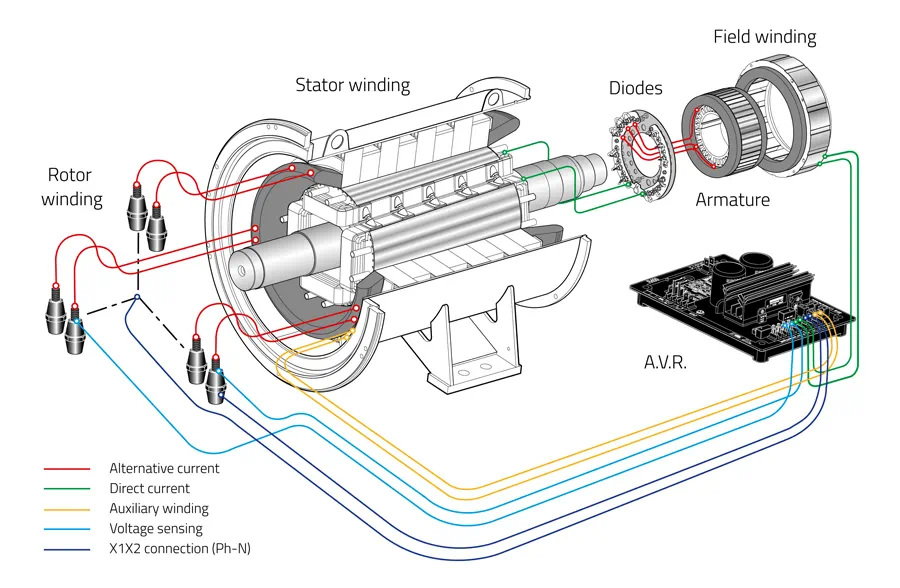
The AREP (Auxiliary Winding Regulation Excitation Principle) system is a self-excited arrangement that uses auxiliary windings built into the main alternator stator to supply power to the AVR. In this system, the AVR draws its operating power from both the auxiliary windings and the main output, eliminating the need for a separate PMG unit.
The key advantages of the AREP system are its lower cost, simpler construction, and improved voltage regulation compared to basic shunt excitation systems. AREP generators are reliable for general-purpose use and perform well with resistive and light inductive loads, making them a popular choice for commercial and residential backup power applications
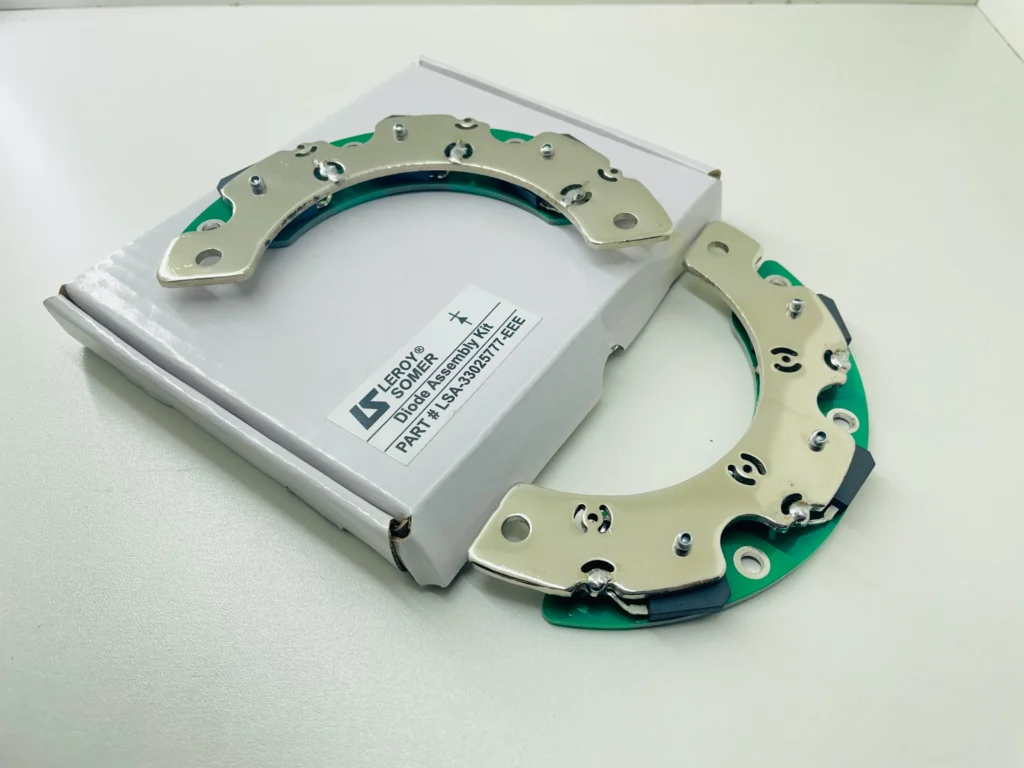
The Diodes assembly (DC Rectifier Assembly) is a vital component in both PMG and AREP systems, acting as the bridge between the exciter and the main rotor by converting AC excitation into stable DC field current. Its reliability directly affects voltage stability, generator response, and long-term performance. In summary, PMG-based systems offer superior control and robustness for critical loads, while AREP-based systems provide a cost-effective and dependable solution for standard power needs.